|
Tested Applications:WB,IF/ICC,FC,ELISA |
|
Tested Reactivity:Human |
|
Host / Isotype:Mouse / IgG2b |
|
Class:Monoclonal |
|
Type: Antibody |
|
Full Name:tumor protein p53 |
|
Synonyms:TP53, Tumour Protein p53, Tumor suppressor p53, tumor protein p53, Antigen NY-CO-13 |
|
Calculated Molecular Weight:43.6 |
|
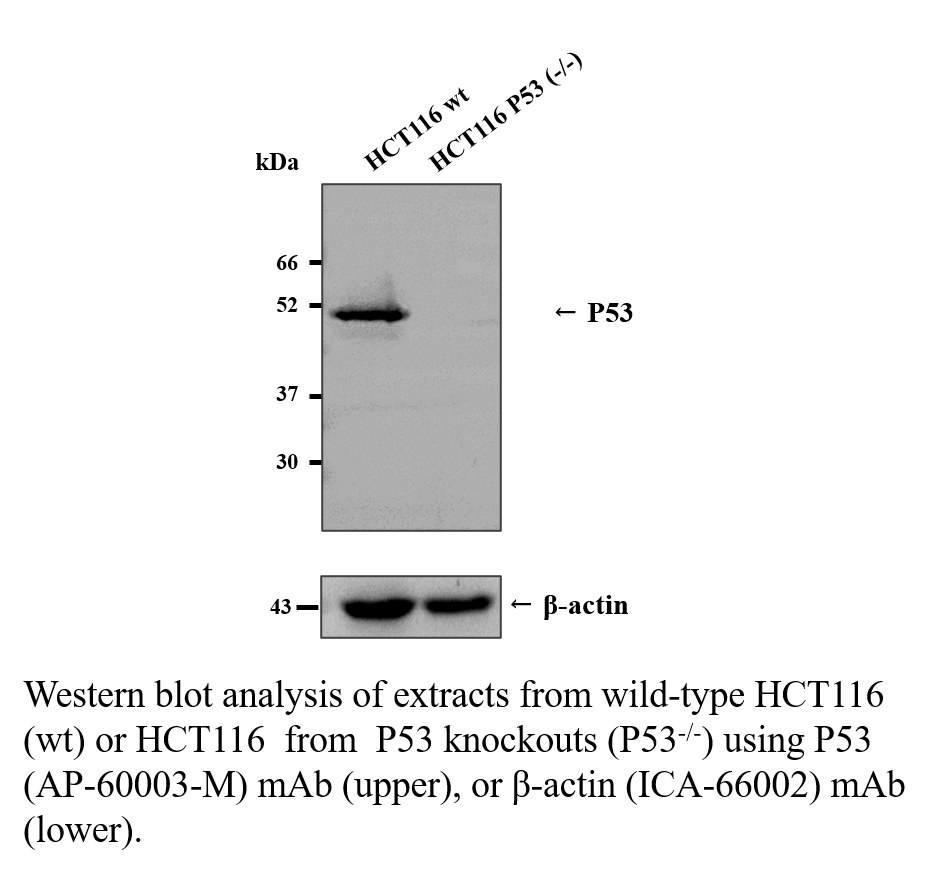
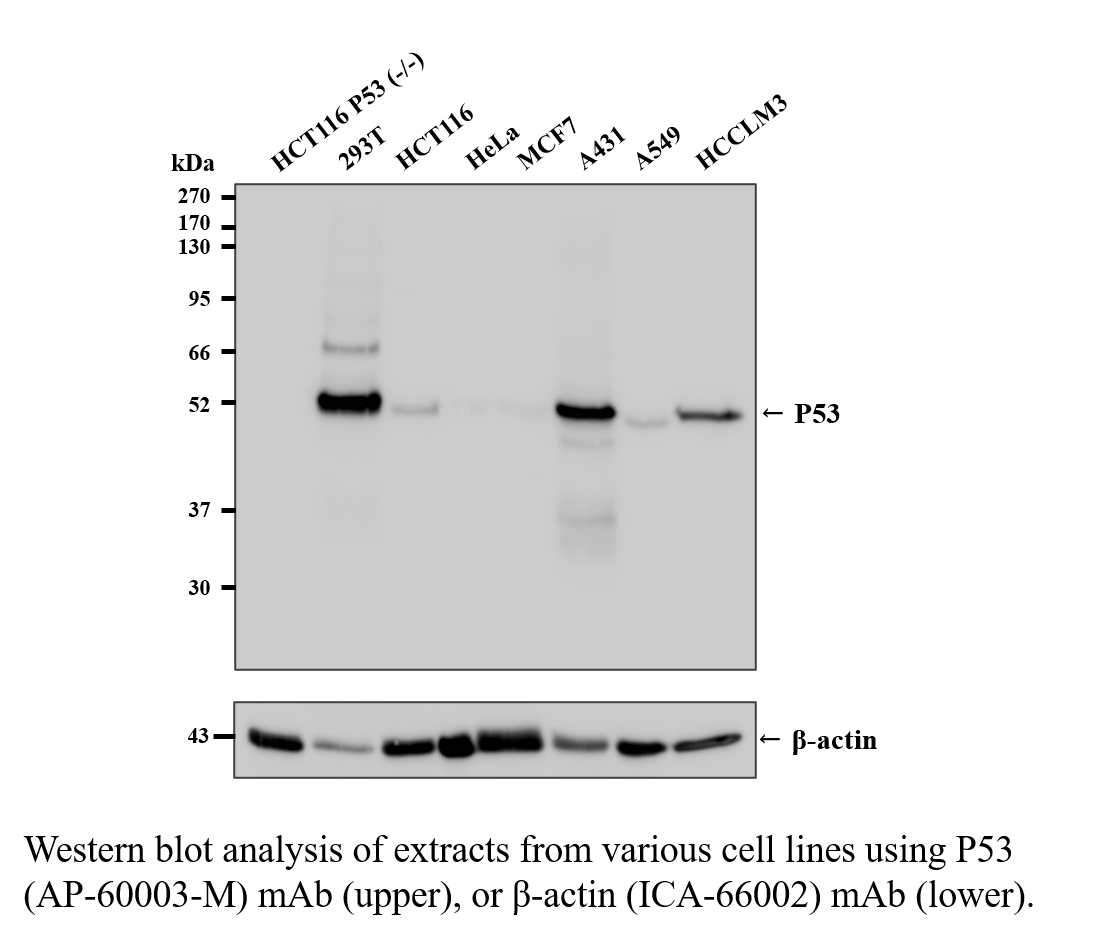
Observed Molecular Weight:50 |
|
Gene ID(NCBI):7157 |
|
Gene Symbol:TP53 |
|
Form:Liquid |
|
Storage Buffer:PBS with 0.02% sodium azide and 50% glycerol pH 7.3 |
|
Storage Conditions:Store at -20°C, avoid repeated freeze-thaw cycles. |
|
Background:p53, often referred to as the guardian of the genome, is a critical tumor suppressor protein encoded by the TP53 gene. It plays a vital role in maintaining genomic integrity and preventing tumorigenesis. p53 functions as a transcription factor that regulates the expression of a variety of target genes involved in cell cycle arrest, DNA repair, apoptosis, and cellular senescence in response to cellular stressors such as DNA damage, oxidative stress, and oncogene activation. Upon activation, p53 can induce cell cycle arrest to allow time for DNA repair or trigger apoptosis if the damage is irreparable. Mutations in the TP53 gene are among the most common alterations found in human cancers, making p53 a key focus of cancer research. Cells lacking functional p53 are more likely to accumulate genetic mutations, leading to unchecked cell proliferation and tumor development. p53 is expressed in a wide range of tissues, with higher levels found in cells that are more frequently exposed to stress, such as rapidly dividing cells. The expression of p53 and its activity can be regulated by various post-translational modifications, including phosphorylation, acetylation, and ubiquitination, influencing its stability and function. |
 我的购物车
 渝公网安备50009802001981

 |